
IDENTIFICATION GUIDE

Carpenter Ants and Wood Damage: Identification for Ontario Homes

Large black ants indoors in spring usually mean a nest, and a nest usually means damp wood. Carpenter ants do not eat wood — they excavate galleries in it, strongly preferring wood that has been wet. Finding them inside is often the first visible symptom of a leak, ice dam or drainage problem.

Carpenter ants are the most damaging structural insect commonly found in Eastern Ontario homes. The insect is the obvious part of the problem; the moisture that let them in is the part that determines whether they come back.

Pest-control reference image for Carpenter Ants and Wood Damage: Identification for Ontario Homes
Visual reference for Carpenter Ants and Wood Damage: Identification for Ontario Homes
01

Identifying carpenter ants

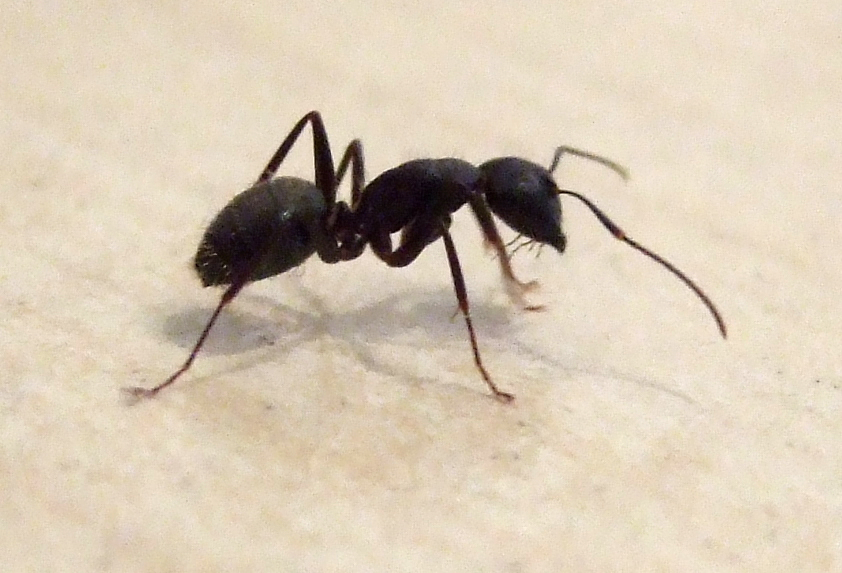
Carpenter ants are among the largest ants found around Ontario buildings, usually black or dark brown, with an evenly rounded upper body profile and a single waist segment. Workers vary noticeably in size within the same colony, which is itself a useful clue.

  • Large, 6–13 mm, black or dark brown
  • Smoothly rounded thorax in profile
  • Elbowed antennae
  • Varied worker sizes in one colony
02

Frass is the real evidence

Carpenter ants push excavated material out of their galleries, producing a coarse fibrous debris that resembles pencil shavings more than sawdust. It often contains insect body parts and collects in small cones below a hidden gallery opening. Unlike sawdust from renovation, it reappears after you sweep it up.

  • Coarse and fibrous, not powdery
  • Contains fragments of insects
  • Accumulates below trim, beams or window frames
  • Returns within days of being cleaned up
03

Follow the moisture

This is the diagnostic step most treatments skip. Carpenter ants strongly prefer wood that is damp or has been wet in the past, so galleries cluster around roof leaks, ice dam damage, plumbing leaks, poorly flashed windows, deck ledgers and wood in contact with soil. Treat the ants without correcting the moisture and a new colony finds the same soft wood.

  • Check roof edges and ice dam history
  • Inspect around windows and door sills
  • Look at deck ledgers and porch columns
  • Correct wood-to-soil contact and drainage
04

Winged ants indoors are a warning

Winged carpenter ants emerging inside during spring indicate a mature colony nesting within the structure rather than foraging from outdoors. A colony generally has to be several years old before it produces winged reproductives, so this finding means the problem is established.

  • Spring emergence indoors is significant
  • Indicates a mature nest in the structure
  • Elbowed antennae and unequal wing pairs
  • Photograph before the specimens are cleared
05

Why spraying the trail fails

A visible trail is a foraging route, not the colony. Carpenter ants maintain a parent nest plus satellite nests in different locations, often with the parent colony outdoors in a stump or tree and satellites inside the building. Surface spraying kills foragers, can cause the colony to split and relocate, and leaves the nests intact.

  • Trails are foraging routes, not nests
  • Parent and satellite nests are separate
  • Repellent sprays can scatter a colony
  • Treatment needs to reach the galleries
06

What treatment involves

Effective work locates the galleries, treats them directly — sometimes by drilling and injecting into wall voids or structural members — and addresses the exterior routes and moisture conditions that made the site attractive. Wood repair is a separate trade and follows the pest work.

  • Inspection to locate galleries
  • Direct treatment of nest sites
  • Exterior route and perimeter work
  • Moisture correction recommendations
COMMON QUESTIONS

Carpenter Ants and Wood Damage: Identification for Ontario Homes: questions we get asked

How do I know if I have carpenter ants or just big black ants?

Carpenter ants are large, 6 to 13 millimetres, with a smoothly rounded thorax when viewed from the side and noticeably different worker sizes within the same colony. The more reliable indicator is the evidence: coarse fibrous frass resembling pencil shavings, often containing insect fragments, accumulating below trim or beams. Ants seen indoors at night, especially in spring, also point to carpenter ants.

Do carpenter ants eat wood?

No. They excavate galleries to nest in and push the debris out, but they do not consume it. That is why frass appears. Their strong preference is wood that is damp or was previously wet, which is why a carpenter ant problem is very often a moisture problem first.

How much does carpenter ant treatment cost in Ontario?

A standard treatment for one home with an accessible nest typically runs $350 to $750. Established colonies with multiple satellite nests, or properties with existing moisture damage, run $750 to $1,400. Wood repair is a separate cost. See our Eastern Ontario pest control price guide for the full breakdown.

I found winged ants in my house in spring. Is that serious?

It is worth acting on. A colony generally needs several years of growth before producing winged reproductives, so winged carpenter ants emerging indoors suggests an established nest inside the structure rather than ants wandering in. Collect a few specimens if you can — identification is much easier with a sample.

Can I just spray the trail I keep seeing?

It will not solve it. The trail is a foraging route, not the nest. Carpenter ants keep a parent colony plus satellite nests in separate locations, and repellent sprays can cause a colony to split and relocate within the building, making it harder to find. Treatment needs to reach the galleries themselves.

Use evidence, not guesswork.

Photos, specimens, dates and exact locations help distinguish a one-time sighting from an active structural pest problem. Product use must follow the Canadian label and should match the identified pest and site.

LOCAL PEST HELP

Need help applying this guide to your property?

Tell us what you found and where the property is located. Emerald Pest Control serves homes and businesses across Eastern Ontario.

Call NowFree Quote