
PUBLIC HEALTH GUIDE

Tick Control in Hastings, Prince Edward County and Frontenac

Hastings Prince Edward is an established blacklegged tick risk area under Public Health Ontario’s current mapping, as are parts of Frontenac. Ticks concentrate at wooded edges, in tall grass and in leaf litter, so property-level control is mostly about modifying that habitat and treating the transition zones where lawn meets bush.

Tick exposure in Eastern Ontario is a genuine public health matter rather than a nuisance pest issue. This guide covers what the risk-area designation means, where ticks actually live on a property, and what can be done about the yard.

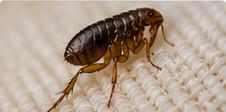
Pest-control reference image for Tick Control in Hastings, Prince Edward County and Frontenac
Visual reference for Tick Control in Hastings, Prince Edward County and Frontenac
01

What an established risk area means

Public Health Ontario defines an established blacklegged tick risk area as a 20 kilometre radius around a location where blacklegged ticks were found during both spring and autumn drag sampling. Hastings Prince Edward is within that designation. The radius is a surveillance construct, not a fence — ticks are carried widely by migratory birds and can turn up outside mapped areas.

  • Based on spring and autumn drag sampling
  • Mapped as a 20 km radius
  • Updated annually by Public Health Ontario
  • Ticks can occur outside mapped areas
02

Where ticks actually are on your property

Blacklegged ticks need humidity and cover. They are concentrated in the transition zone where mown lawn meets woods, in leaf litter, in tall grass and in ground cover — not in the middle of a maintained lawn in full sun. This is why yard modification is effective: most of a typical property is already low risk.

  • Wooded edges and brush lines
  • Leaf litter and ground cover
  • Tall grass and unmown margins
  • Stone walls and woodpiles
03

Habitat modification comes first

Before any treatment, the physical changes do most of the work. Widening the mown margin, clearing leaf litter, and creating a dry barrier between lawn and woods reduces the habitat ticks depend on and limits how far they move into the used part of the yard.

  • Keep grass short in used areas
  • Remove leaf litter and brush piles
  • Create a dry gravel or mulch border at the bush line
  • Move woodpiles and play equipment away from edges
04

When property treatment makes sense

Perimeter applications target the wooded edge and transition zones rather than the whole yard, and are timed to tick activity. This suits properties with young children, dogs, or heavy use of areas adjacent to bush. Treatment runs $250 to $500 per application and is usually repeated during peak season.

  • Perimeter and edge applications
  • Timed to spring and autumn activity
  • Repeated during peak season
  • Best combined with habitat work
05

Seasonality

Adult blacklegged ticks are active in spring and again in autumn, including on mild days above freezing. Nymphs, which are tiny and responsible for a large share of transmission because they are so easily missed, are most active in late spring and early summer. Risk is not confined to midsummer.

  • Adults active spring and autumn
  • Nymphs peak late spring to early summer
  • Activity continues on mild winter days
  • Peak caution period is April through July
06

What belongs to public health, not to us

Tick removal from a person, testing, symptoms and treatment decisions are matters for Hastings Prince Edward Public Health and your clinician. We work on the property. If you have been bitten or are unwell, contact a health professional rather than a pest control company.

  • Contact a clinician about bites or symptoms
  • HPE Public Health provides local guidance
  • Public Health Ontario maps risk areas
  • Emerald handles yard habitat and treatment only
COMMON QUESTIONS

Tick Control in Hastings, Prince Edward County and Frontenac: questions we get asked

Are there ticks in Belleville and Prince Edward County?

Yes. Hastings Prince Edward is an established blacklegged tick risk area under Public Health Ontario’s mapping, meaning blacklegged ticks have been found through drag sampling in both spring and autumn. Parts of Frontenac carry the same designation. Ticks are most concentrated in wooded areas, brush and tall grass rather than in open maintained lawn.

How do I make my yard less attractive to ticks?

Focus on the edge where lawn meets woods, because that is where ticks concentrate. Keep grass short in the areas you use, remove leaf litter and brush piles, and create a dry gravel or mulch border about a metre wide at the bush line to slow movement into the yard. Move woodpiles, swing sets and seating away from the wooded edge.

When are ticks active in Eastern Ontario?

Adult blacklegged ticks are active in spring and again in autumn, and will move on any mild day above freezing — including in winter. Nymphs are most active from late spring into early summer and account for a large share of disease transmission because they are poppy-seed sized and easy to miss. Treat April through July as the peak caution window, but do not assume winter is risk-free.

Does yard spraying eliminate ticks?

No, and be wary of anyone who says otherwise. Perimeter treatment reduces tick numbers in the treated transition zones, which lowers exposure in the parts of the yard your family actually uses. It does not clear a wooded property, and it does not replace personal precautions such as checking yourself, your children and your pets after time outdoors.

I have been bitten by a tick. What should I do?

Contact a health professional. Tick removal technique, testing and any treatment decisions are medical matters and Hastings Prince Edward Public Health publishes local guidance. A pest control company can help with your property, but not with a bite. If you develop a rash, fever or flu-like symptoms after a bite, seek care promptly.

Use evidence, not guesswork.

Photos, specimens, dates and exact locations help distinguish a one-time sighting from an active structural pest problem. Product use must follow the Canadian label and should match the identified pest and site.

LOCAL PEST HELP

Need help applying this guide to your property?

Tell us what you found and where the property is located. Emerald Pest Control serves homes and businesses across Eastern Ontario.

Call NowFree Quote