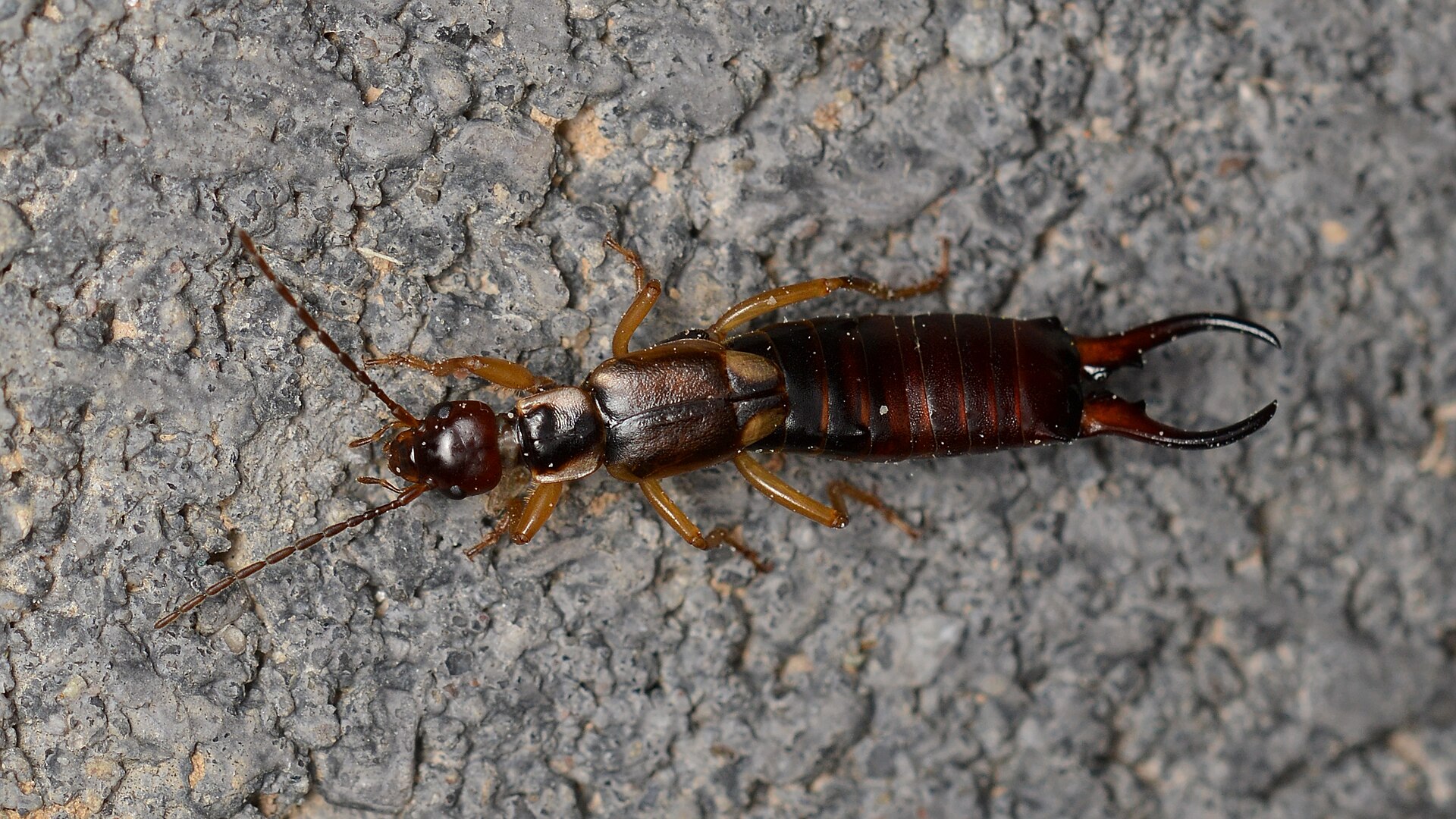
Male European Earwig
Adult males usually have more curved, separated forceps at the end of the abdomen.
- Size
- About 12–20 mm
- Appearance
- Brown body with strongly curved rear forceps
- Usually found
- Damp mulch, vegetation, foundations and basements
 Call (613) 743-8074
Compare the common male and female forms of the European earwig using Ontario reference photographs.
The European earwig is the earwig most often found around Ontario homes and landscaping. Male and female forceps have different shapes, so they can appear to be different species.
Each card uses an actual reference photograph of the pest or life stage named.
Adult males usually have more curved, separated forceps at the end of the abdomen.
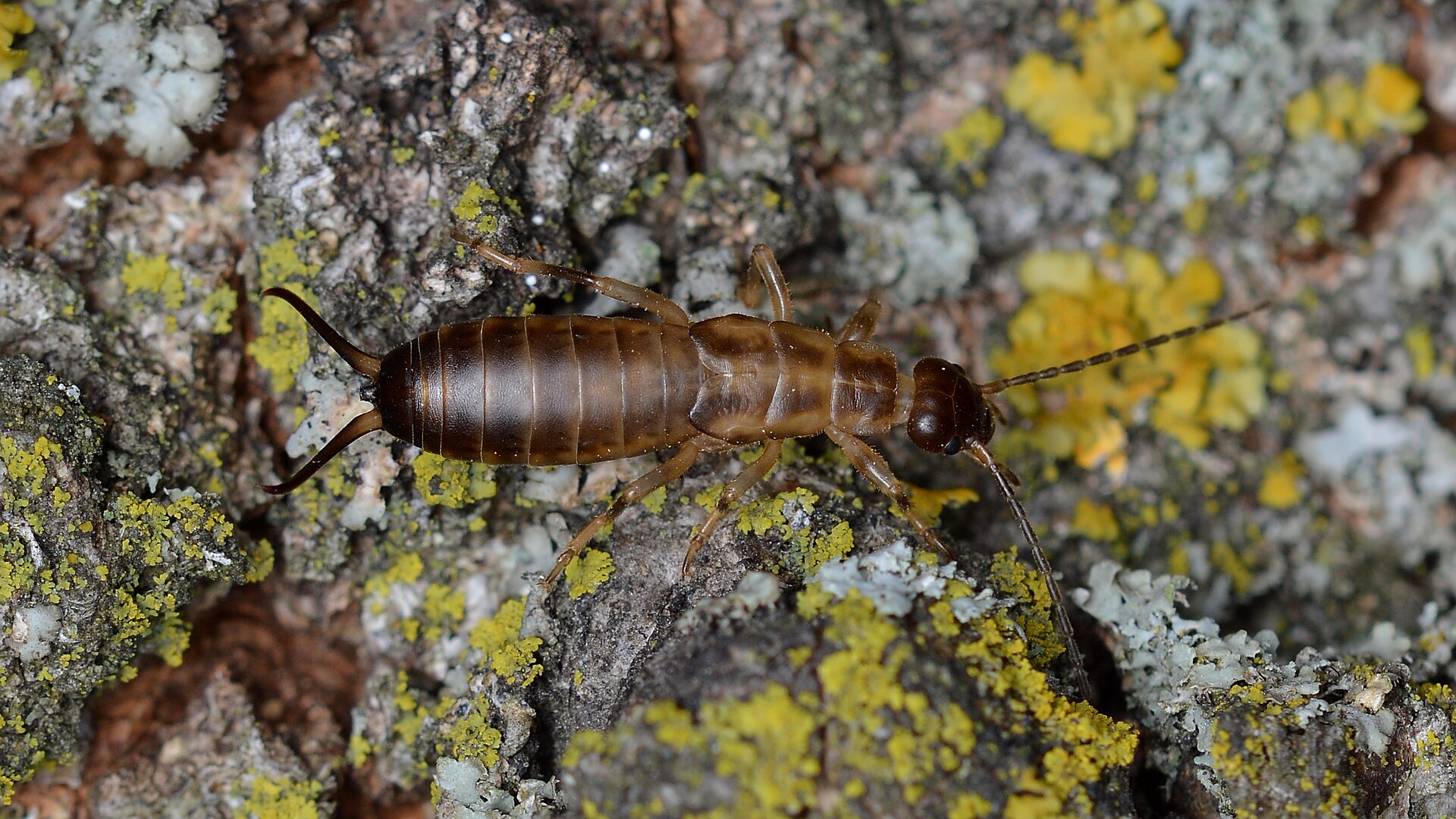
Adult females have straighter forceps that sit closer together, but otherwise resemble males.
| Type | Size | Appearance | Typical location | Activity |
|---|---|---|---|---|
| Male European Earwig | About 12–20 mm | Brown body with strongly curved rear forceps | Damp mulch, vegetation, foundations and basements | Most visible late spring through summer |
| Female European Earwig | About 12–20 mm | Brown body with straighter, closer rear forceps | Damp protected material, gardens and lower levels | Most visible late spring through summer |
The rear forceps are distinctive. Earwigs do not crawl into people’s ears and are generally nuisance invaders indoors rather than structural pests.
Identify a Pest From a PhotoSend Emerald Pest Control a clear photo and property details for professional confirmation and appropriate next steps.