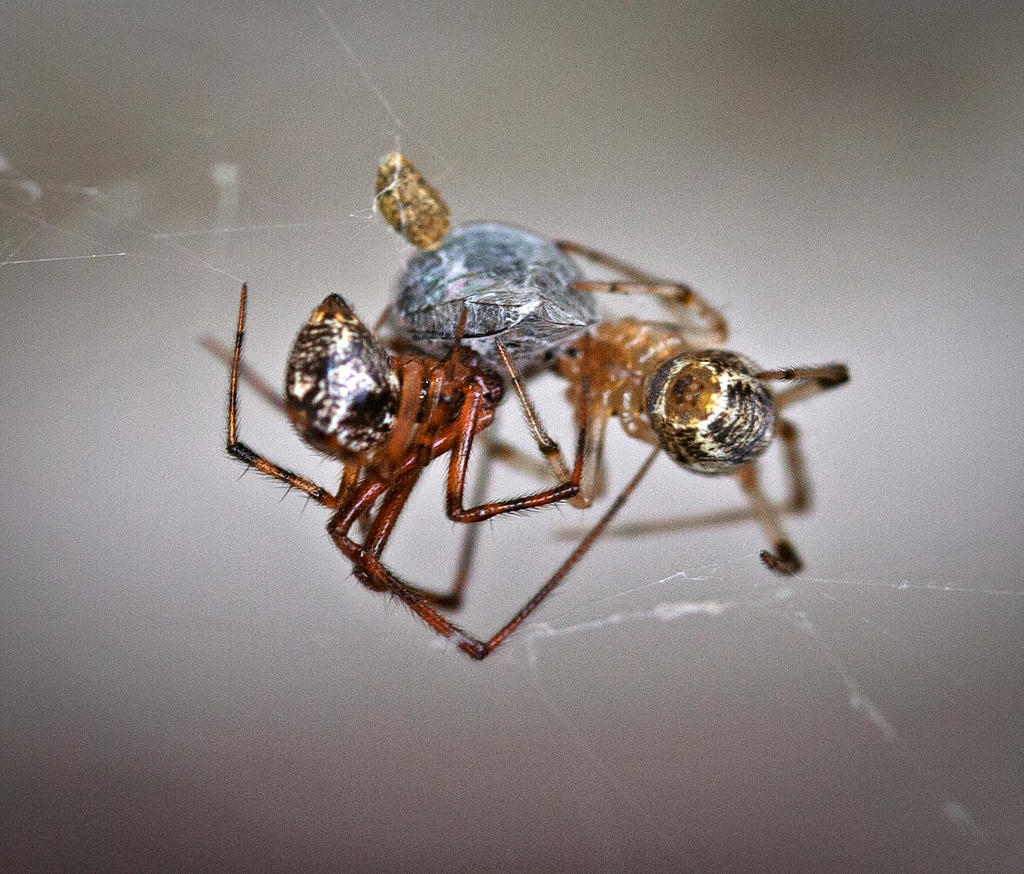
Common House Spider
A cobweb spider that builds irregular tangled webs in quiet parts of buildings.
- Size
- Body about 4–8 mm
- Appearance
- Rounded patterned abdomen and slender legs
- Usually found
- Corners, garages, basements and window frames
 Call (613) 743-8074
Compare common house, cellar, wolf and yellow sac spiders using real reference photographs and behaviour clues.
Many Ontario spiders are occasional invaders or beneficial predators. Web style, body shape and where the spider was found are important identification clues.
Each card uses an actual reference photograph of the pest or life stage named.
A cobweb spider that builds irregular tangled webs in quiet parts of buildings.
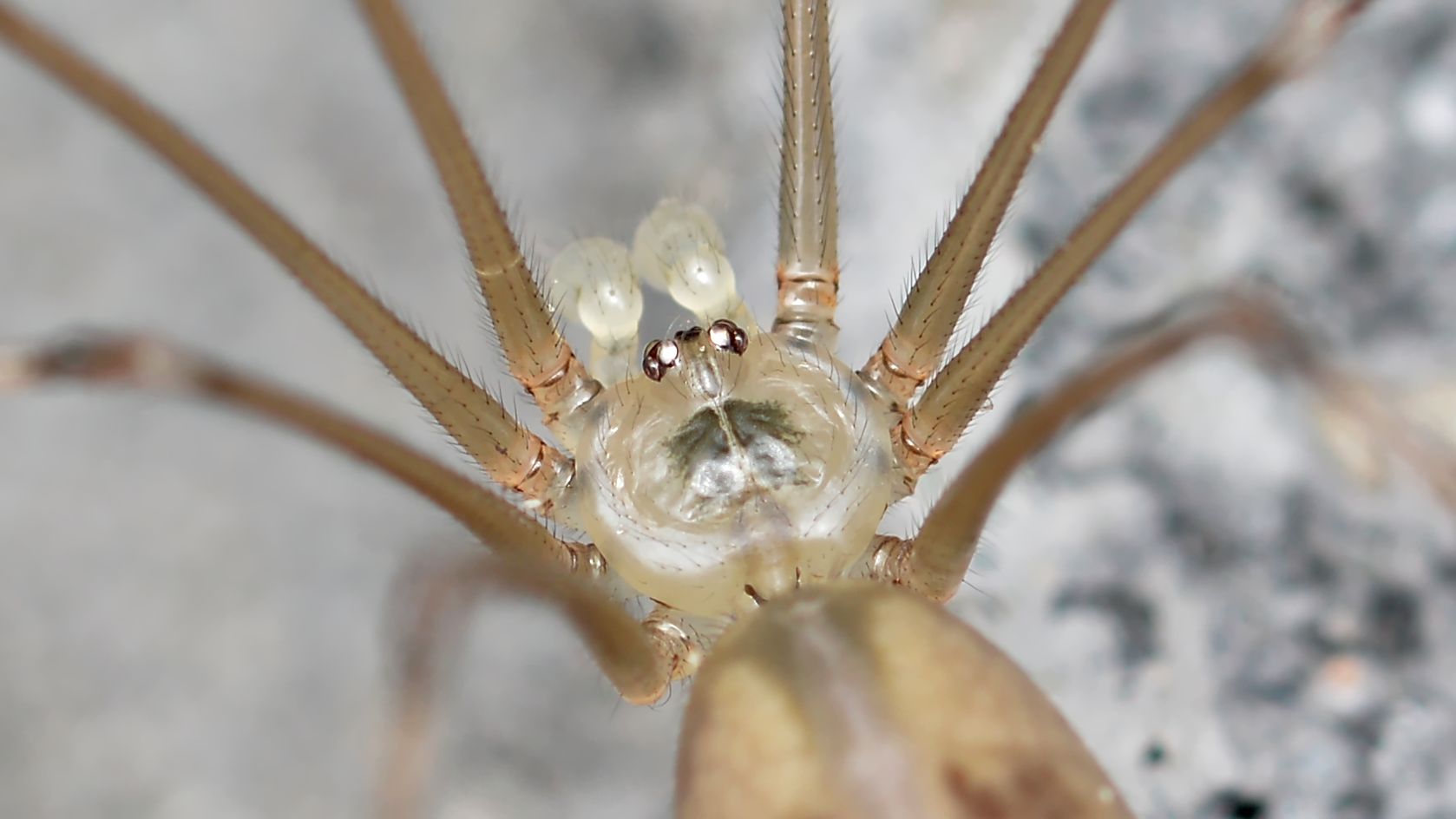
A delicate web-building spider often called a daddy long-legs spider, though it is not a harvestman.
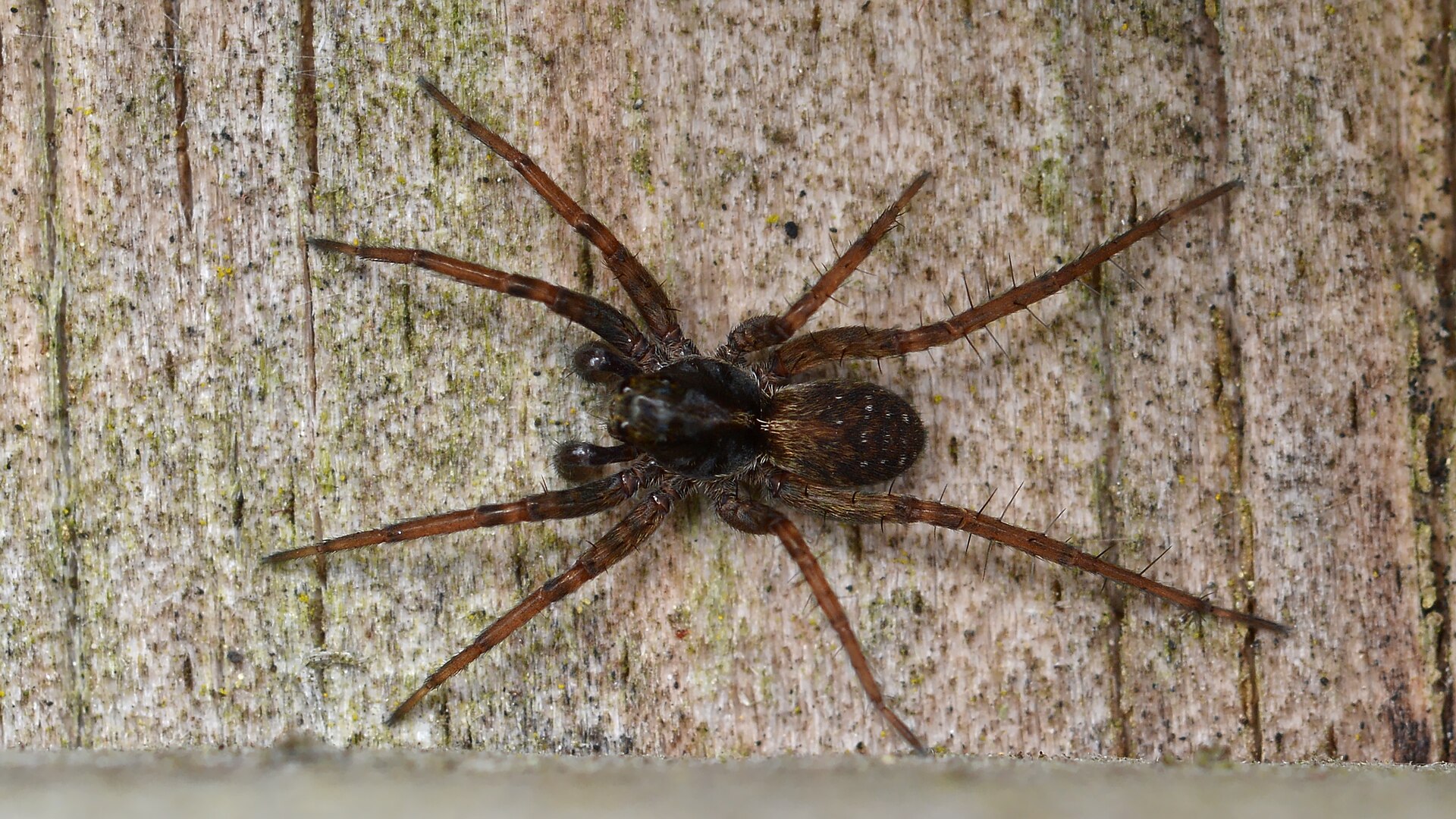
Active hunting spiders that run after prey rather than relying on a capture web.
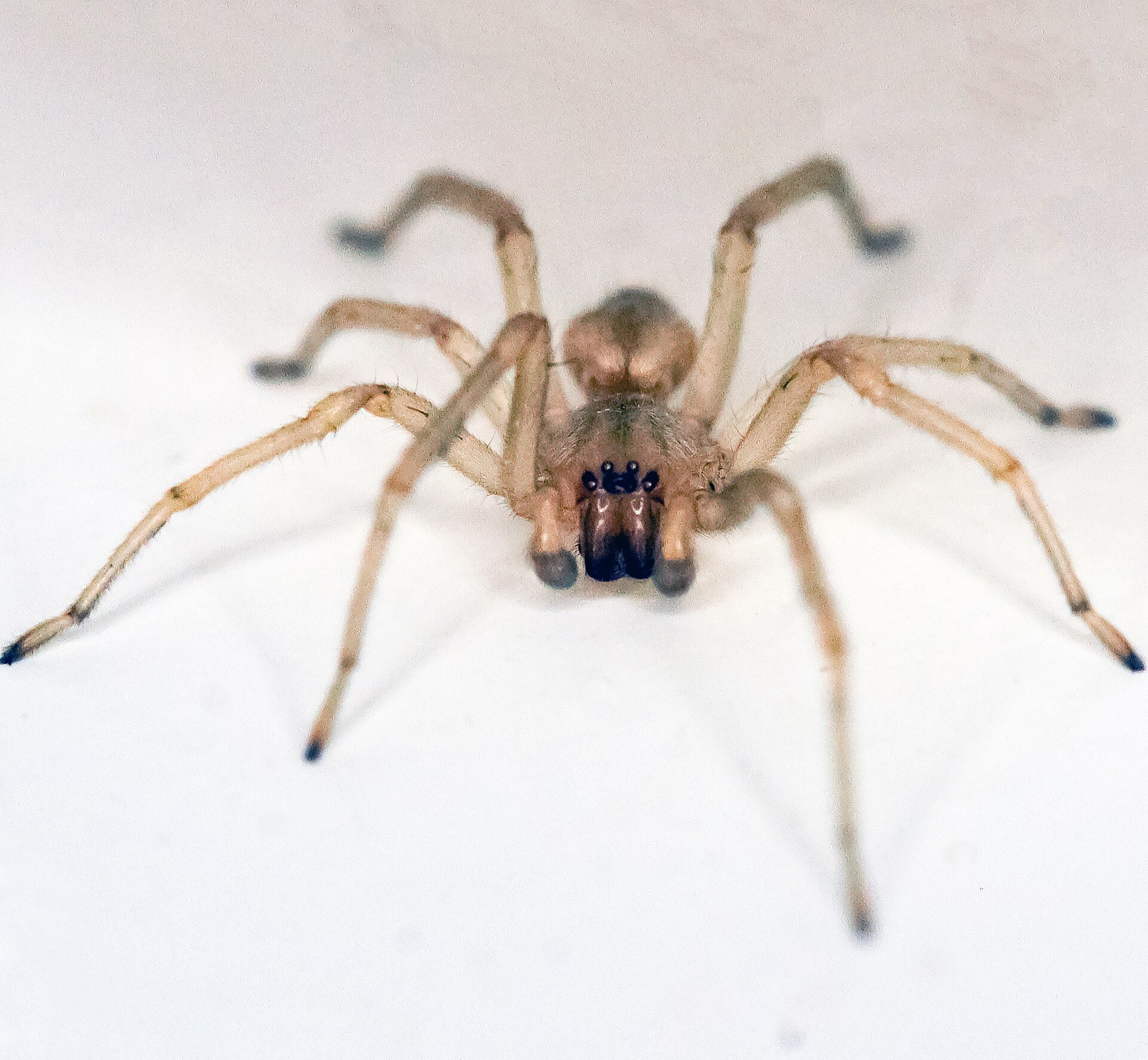
A roaming pale spider that rests inside a small silk sac rather than a prey-catching web.
| Type | Size | Appearance | Typical location | Activity |
|---|---|---|---|---|
| Common House Spider | Body about 4–8 mm | Rounded patterned abdomen and slender legs | Corners, garages, basements and window frames | Year-round indoors |
| Long-Bodied Cellar Spider | Body about 6–10 mm | Very long thin legs and a narrow cylindrical body | Ceilings, basements, garages and cellars | Year-round indoors |
| Wolf Spider | Varies; many are 8–25 mm | Robust running spider with strong legs and prominent eyes | Ground level, basements, garages and outdoors | Most visible spring through fall |
| Northern Yellow Sac Spider | Body about 6–10 mm | Pale yellow or tan with darker mouthparts | Walls, ceilings, windows and folded silk retreats | Often noticed indoors in fall and winter |
Avoid handling an unknown spider. A clear photo from above and the front, plus a photo of the web or location, provides the best identification context.
Identify a Pest From a PhotoSend Emerald Pest Control a clear photo and property details for professional confirmation and appropriate next steps.