
Start with winter rodent evidence
Check accessible storage, kitchens, garages and utility rooms for new droppings, gnawing and damaged packaging. Photograph evidence before cleaning and compare it with earlier notes. Do not dry sweep or vacuum rodent droppings; use Health Canada’s cleaning guidance.
- Check accessible door seals and utility openings once snow allows.
- Inspect feed and pantry storage for damage.
- Ask whether any earlier exclusion repairs need reassessment.
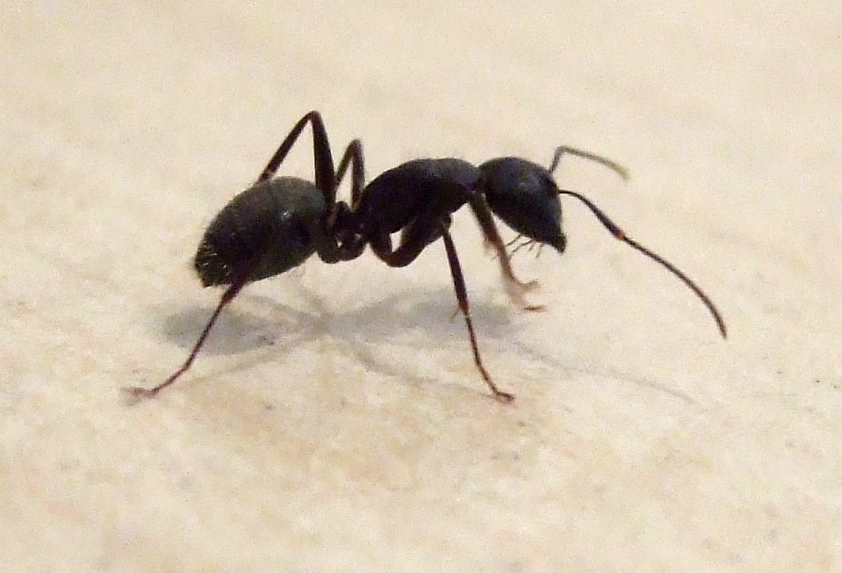
Investigate repeated indoor ants
Ants appearing inside while outdoor conditions remain cold deserve identification. Carpenter ants active in winter can indicate an indoor nest, but firewood can also bring ants inside. Neither one ant nor its size alone establishes the source.
- Photograph an ant closely enough to show body shape.
- Record trails, winged ants, frass and the room where activity repeats.
- Check for leaks or softened wood without opening structural cavities yourself.
Separate overwintering insects from new breeding
Cluster flies and other occasional invaders can emerge near warm windows as days brighten. Small flies around drains or food can have a different source. Identify the insect before selecting a treatment or deciding an attic needs work.
- Check window and vent screens where safely accessible.
- Remove identified nuisance insects and record recurring rooms.
- Arrange an inspection if activity is persistent or the source is unclear.
Plan repairs before the busy outdoor season
Leaks, damaged screens, door gaps and waste storage are practical priorities. Do not block required ventilation or seal active animal entrances without assessing the occupants. A pest inspection and building repair may need different trades and separate quotes.
- Prioritize accessible entry gaps and moisture corrections.
- Keep stored material and waste managed around the building.
- Book a cottage check before the first guests arrive, leaving time for follow-up.